
Somewhere Between
Notes on Afro-latinídad, Classism and Identity

Dear kin,
The following excerpt is the introduction to a much longer essay about Afro-Latino identity, classism and tribalism. Still working on concluding the longer body of work, but wanted to breathe life into these initial reflections and get them from off the page and out into the world.
I hope you’re taking care of yourselves, and I plan to speak with you again very soon. 🖤
“Puerto Ricans don’t play football.”
I dismissed the giddy words of a shortsighted teammate at first. He stood a dozen yards away guzzling water on the sideline. I was irritated by a heavy helmet, drenched in sweat, with little time to conjure a witty remark as I ran a speed option play. I instead focused on dishing a clean lateral pitch to my running back under a seething late-July-sun that pummeled us all. An insufferable heatwave heightened the brutal conditions of our fully padded practice. It was our last session of the month before a week-long break, prior to our takeoff for August training camp. All I could think about during those last few reps was ending practice on a positive note, and diving head first into a swimming pool.
His statement was brushed off because I grew up with the secure belief that Puerto Ricans excelled in all things, especially sports. Cut out posters of Tito Trinidad, Miguel Cotto, Pudge Rodríguez, Carlos Beltrán, and Roberto Clemente were firmly taped above eye level along the walls of my baby blue coated room in Mamí’s apartment at 62 Washington Street. The building had an industrial feel with its auburn-colored bricks, and was the place where my dreams of becoming the first Afro-Borícua quarterback in the NFL were conceived.
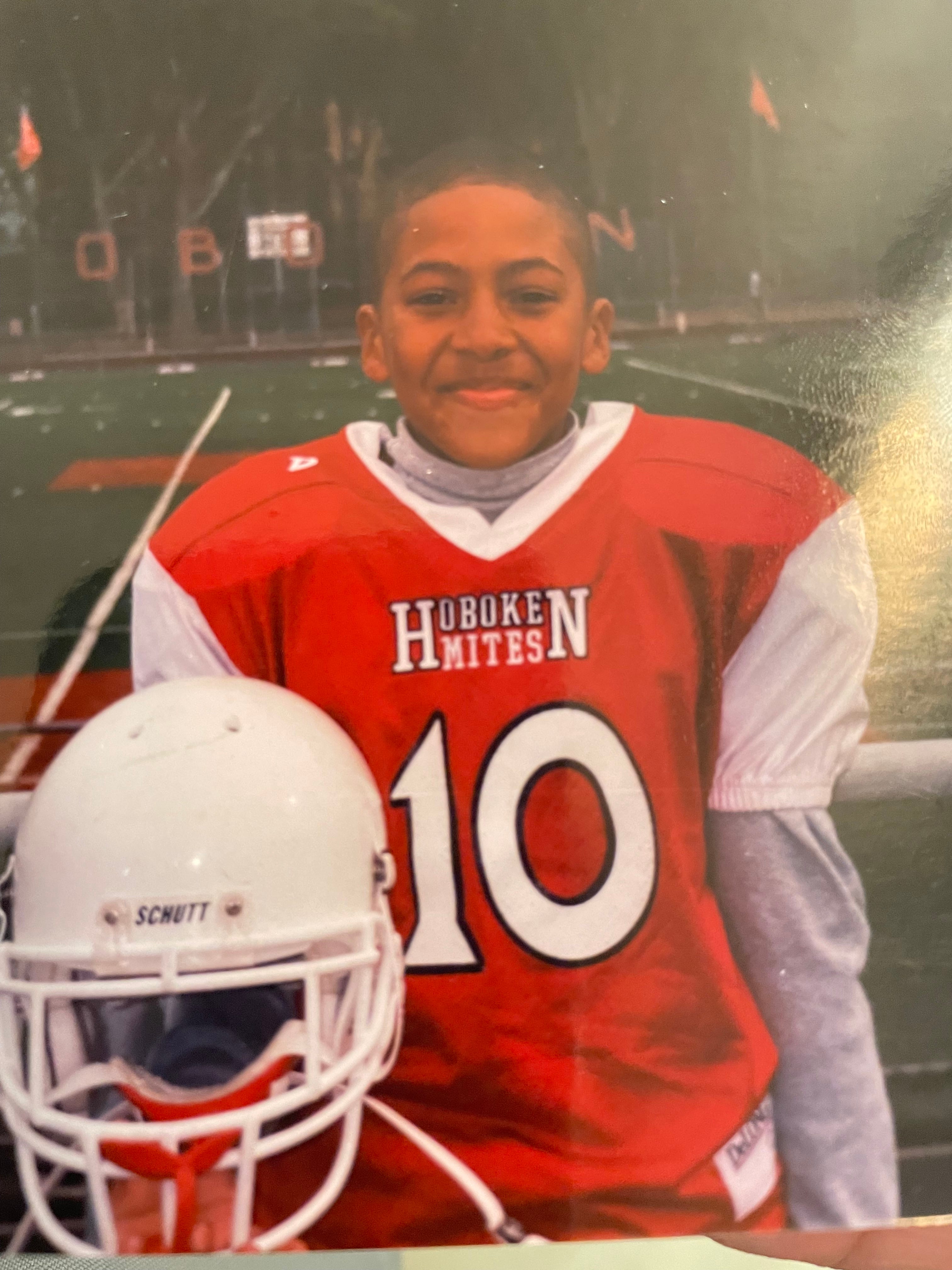
The misplaced words may have felt as though they carried some validity due to the aged trope of Puerto Rican athletes exclusively gravitating toward the three sacred B’s: Baseball, Boxing and Basketball. Externally I chose to disregard his comment for the sake of focusing on the bigger task at hand and maintaining composure. Being immovably poised is arguably the most important component engrained in all great quarterbacks. Internally though, I took offense because of whom the words had come from.
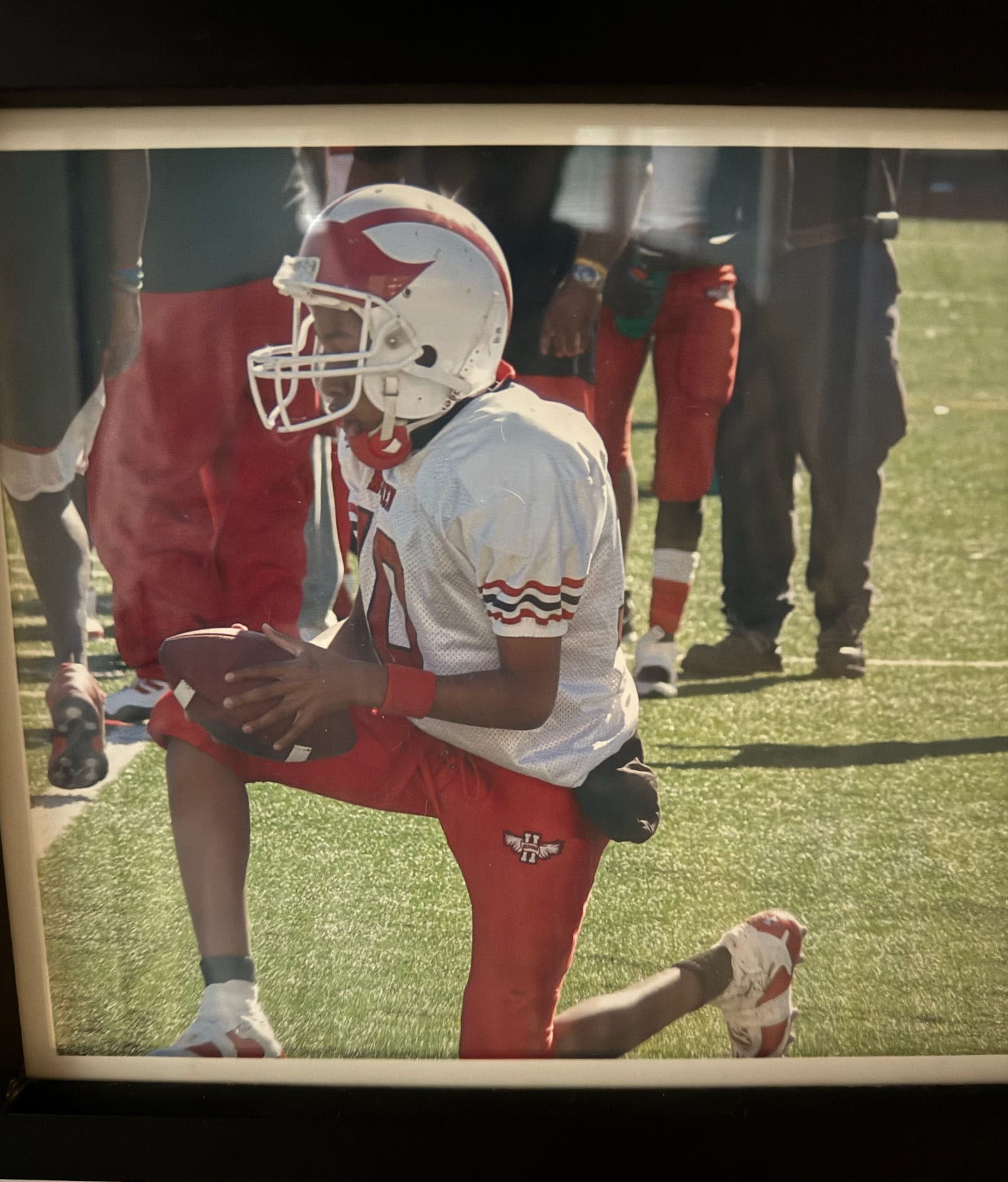
I was determined to earn the prestigious title of starting QB for the freshman football team at Saint Peter’s Prep. I strongly felt like my identity, which in many ways was tied to the sport during those younger years, should never be questioned by onlookers, both in the figurative and literal sense. Conceding to the regurgitated trope that confined Borícuas to just several athletic lanes was a predetermined boundary that directly opposed the dignity I carried with me everywhere, at all times. The displaced limits equally breached logic, as well. Afro-diasporic athletes objectively dominate North American sports, including and especially the game of football, and have done so for over a century.
Years prior to his enclosed remark, my first spark with the game was ignited within the housing projects of Hoboken where I spent the majority of my time at Abuelítas house. Before Mamí joined the Hoboken Fire Department, she worked a handful of receptionist and waitress jobs in order to provide for her and I. Childcare was backed by tribalism, tagging in Abuelítas, Tías, prímas and uncles. I bore witness to the magic of having a village behind you for both livelihood and support. Despite being economically handicapped, we carried an abundance of wealth with us, through love and connectivity.
As did most folks in our neighborhood. Our realm was tucked deep into a corner of town away from the gaze of other residents who were predominantly middle-to-upper-class. The families that inhabited the rows of brick buildings stationed between Harrison and Jackson Streets, included African American, Puerto Rican, Dominican, Mexican, Jamaican and broader varieties of Afro-diasporic and Latino peoples who communed and survived alongside one another. My perception of Puerto Ricanhood was rooted in Blackness due not only to my own genealogy that includes Garífuna ancestry, but also because of my cultural upbringing that directly influenced the ways in which my friends and I interacted with each other.
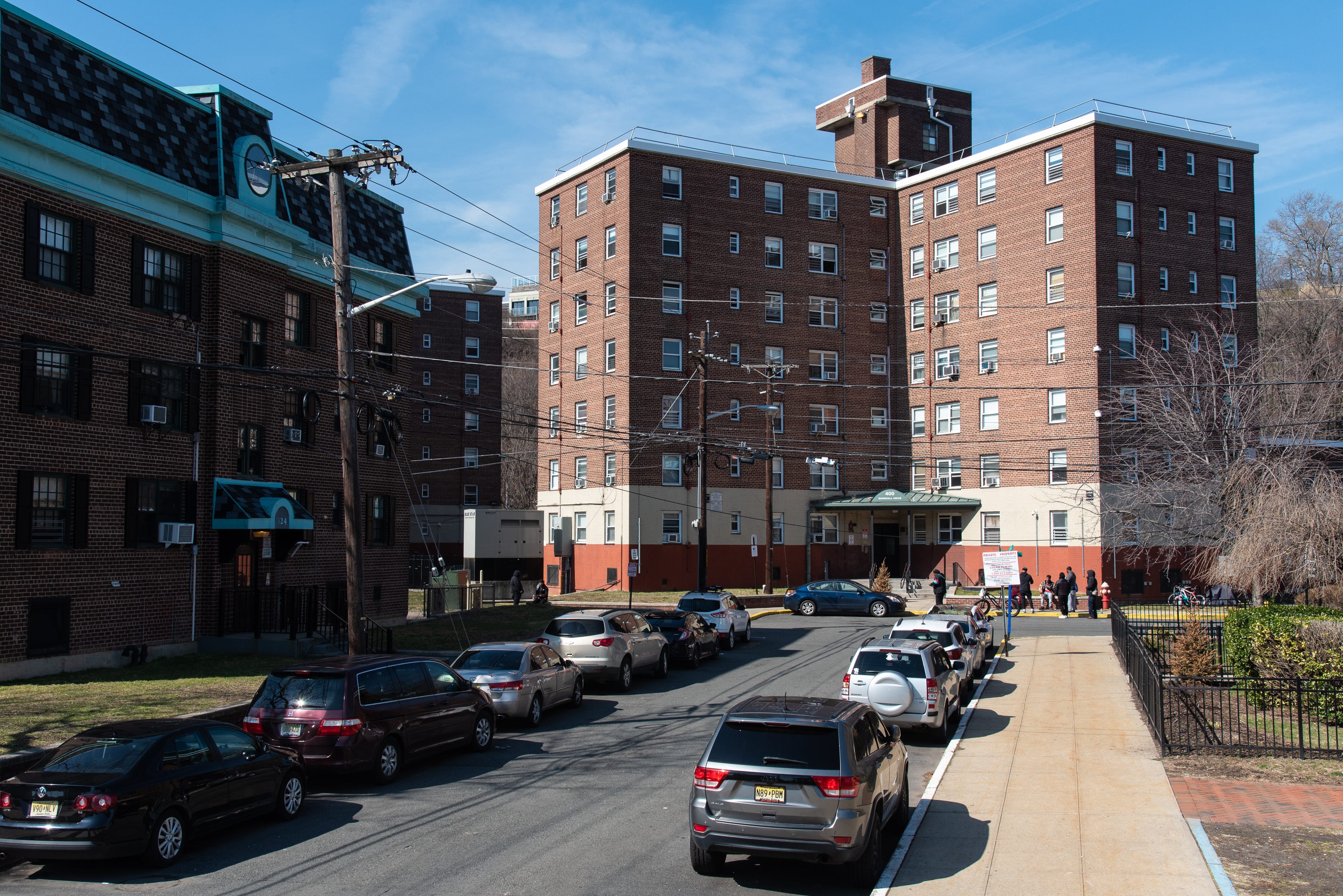
The concrete courtyard nestled between the Four Bricks, a towering set of cocoa-colored buildings that peaked high above dozens of smaller homes dotted along Harrison and Jackson streets, played host to some of the more gorgeous childhood memories I can lucidly recall. In those days, we treated fire hydrants like swimming pools, yelling and splashing through slippery sections of one-way streets while our parents and grandparents sat outside and rendezvoused amongst themselves.
We’d play every sport imaginable with fervor, lasting hours on mere quarter juices, honeybuns, sunflower seeds and potato chips to nourish our brittle bodies that were soaked in all the germs a city had to offer, until the moon arrived to switch places with the sun. Once the street lights illuminated the pavement, we recognized our cue to head upstairs and steer clear from all the adult business that took place at night. The burnt orange backdrop of dusk, supported by sleek shades of dark pink and indigo, were the colors that paused our pavement patter and prompted showers and sleep.
My first time evading tacklers and heaving the ball with a tight spiral high above the heads of would-be defenders was the day I won over the hearts and minds of eventual close friends and teammates. My introductory game in the courtyard resulted in triumph. I was seven years old, and believe that was precisely the moment when a collective agreement was struck amongst those in attendance: Puerto Ricans do indeed play football.
The concept of confining me within the three sacred B’s was dismantled for the remainder of my childhood, until high school. And in the context of who can and cannot play the game, of who belongs between the lines and who doesn’t, my ancestry was never questioned or even mentioned. While, at the time, we lacked the ability to verbalize the cultural, geographic and linguistic distinctions between African Americans and Afro-Caribbeans, we undoubtedly understood the concept of being diasporic kin, and unconsciously chose to hone in on our connectivity. Not only did we comprehend this notion, but more importantly, we embraced it through collective actions and practices.
Our kinship was audible through communication. We utilized slang overheard both in the streets and through boombox speakers that blared the voices of our favorite MC’s. DMX, Nas, Big Pun, Notorious B.I.G, JAY-Z, 50 cent, and Jadakiss would echo familiar narratives we bore witness to on our sidewalks, which were habitually filled with scattered beer cans and liquor bottles that nourished the pavement with stories leftover from a previous night of celebration and self medication. The rappers we idolized perfectly encapsulated a familiar ecology, rhyming about the stench of our elevators and hallways that reeked of urine and empty Old English Malt Liquor bottles that garnered numberless specs of dust in the corner of a stairwell until someone disposed of it some weeks, or even months later.
They seized even finer details such as the graffiti which decorated buildings and morphed our hood into a public art gallery, depending on your perception. They sang about the leftover blunt roaches scattered across the courtyard and the cigarette butts we’d kick out of our paths as we played. We sang their lyrics aloud, copied their lingo and repeated their stories, which in many ways were our own.
Somehow, you managed to take me back there - to those multiple places in your memory. Vivid imagery and intense nostalgia - thank you. Thank you for sharing this utterly beautiful piece - I hope you finish it soon!
This is a beautiful piece. Thanks for sharing and bringing part of your experience to life :)